Cedofeita: Porto's Creative Heart
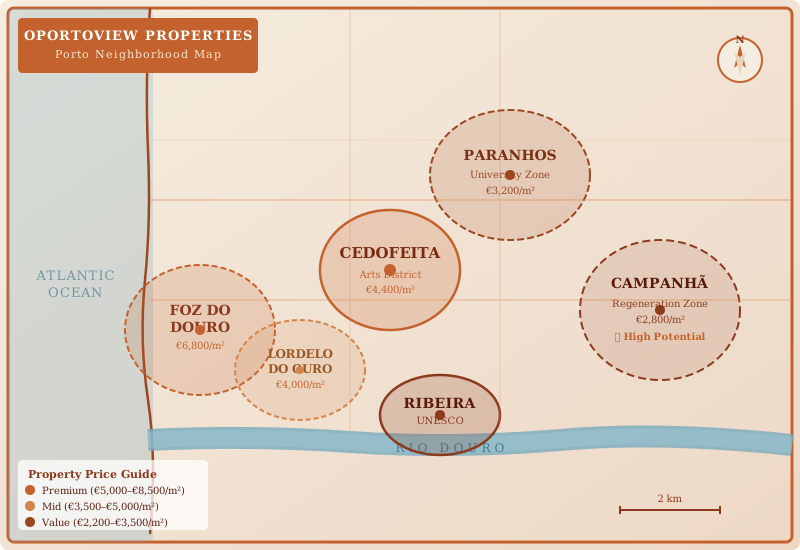
Cedofeita is the neighborhood that people who actually know Porto point to when asked where they would want to live. It sits immediately west of the Aliados axis — close enough to the commercial centre to walk to work, far enough from the tourist density of Ribeira to feel like a real neighborhood where real people live real lives. The streets around Rua de Miguel Bombarda and the antique dealers of Rua de Santa Catarina give Cedofeita its artistic identity; the bookshops, small theatres, wine bars, and bakeries give it its livability.
The Character of Cedofeita: Beyond the Gallery Mile
Cedofeita earned its reputation as Porto’s creative quarter along Rua de Miguel Bombarda, a street that transformed from a strip of medical supply shops into Porto’s gallery row over the course of the 2000s and 2010s. On the last Saturday of each month, the Bombarda galleries open simultaneously for vernissages — openings that spill onto the street, transforming the neighbourhood into an impromptu open-air art fair that draws both local collectors and art tourists from across Europe.
But Cedofeita is considerably more than its gallery mile. The neighborhood contains the extraordinary Igreja de Cedofeita — reputed to be one of the oldest churches in the Iberian Peninsula, its Romanesque simplicity a striking contrast to the Baroque exuberance of Porto’s better-known churches. The Mercado de Cedofeita, a covered market that has recently undergone renovation, anchors the neighborhood’s daily life with fresh produce, fishmongers, and the kind of interaction between shopkeeper and regular customer that disappears in cities that gentrify too completely.
The independent coffee shop culture is strong here. Fauna & Flora on Rua Duque de Loulé, Combi Coffee (with a Cedofeita location), and the legendary Zenith brunch spot on Rua do Dr. Nuno Álvares Pereira represent a café scene that international residents consistently cite as one of the best things about living in the neighborhood. The food is genuinely good, the WiFi reliable, and the clientele a mix of Portuguese creatives, international remote workers, and academic staff from the nearby university.
Property Types in Cedofeita
Cedofeita’s housing stock is predominantly late 19th-century residential construction — the period when Porto expanded rapidly westward from the medieval core, building the broad streets and solid granite tenements that give the neighborhood its architectural solidity. These buildings — three to six storeys, with communal stone stairs, high ceilings and sash windows — have been the target of significant renovation activity since 2015, producing a supply of refurbished apartments that represent some of Porto’s best value for quality.
The renovation quality in Cedofeita varies significantly. The best-refurbished apartments — those by developers who understood the market’s eventual direction — feature original wooden floors refinished rather than replaced, exposed stone interior walls, kitchen-diners opening to small Juliet balconies, and modern underfloor heating beneath the restored floors. These are genuinely beautiful apartments that photograph exceptionally well and attract the premium tenants willing to pay for quality.
Poorly renovated properties — unfortunately plentiful in any neighborhood that gentrified quickly — substituted cheap engineered flooring for original boards, tiled over granite walls, and installed the cheapest available kitchen and bathroom fittings. These apartments look adequate in photographs but feel soulless on viewing and generate correspondingly lower rental premiums. OportoView Properties’ team can help buyers distinguish between the two on any given viewing.
Cedofeita and the Medium-Term Rental Market
Cedofeita has emerged as one of Porto’s best neighborhoods for the medium-term furnished rental market — the segment catering to workers, professionals, and digital nomads staying for periods of one to twelve months. The combination of central location, vibrant neighbourhood character, excellent cafes and restaurants, and proximity to the Aliados business axis makes Cedofeita T1 and T2 apartments enormously attractive to this tenant profile.
Typical medium-term rental rates for a quality furnished T2 in Cedofeita run €1,350–€1,700 per month, depending on finish, floor level and proximity to the gallery street. For investors, this represents gross yields of 5.5–7.5% on current purchase prices — materially better than comparable properties in Foz do Douro while still enjoying strong capital appreciation prospects.
The digital nomad community is particularly concentrated in Cedofeita. Porto’s emergence as one of Europe’s leading remote-work destinations — driven by good weather, modest cost of living relative to Western European cities, excellent internet infrastructure, and an English-speaking professional community — has created a permanent baseline of nomadic tenants who stay in quality furnished apartments for three to six months before potentially returning the following year. For landlords with well-presented stock, occupancy rates of 85–90% annually are achievable without the operational intensity of nightly short-let management.
Key Streets in Cedofeita for Property Buyers
Rua de Miguel Bombarda: The gallery row itself. Residential stock here is limited — the street is primarily commercial — but nearby residential streets benefit from the footfall and reputation. Apartments on Rua Duque de Loulé, Rua de Gonçalo Cristóvão, and Rua da Conceição have all appreciated strongly since the Bombarda galleries established the neighbourhood’s cultural identity.
Rua de Santa Catarina (western section): Porto’s famous commercial street extends into Cedofeita, and the residential floors above the street-level shops represent some of the neighborhood’s most interesting purchase opportunities. Traffic noise on lower floors can be significant; fourth floor and above with double glazing provides a comfortable living environment despite the busy ground level.
Rua de Cedofeita itself: The central spine of the neighborhood, running from the eponymous church through to the university area, contains a mix of residential and commercial uses and a relatively complete range of property types and price points. Good starting point for buyers getting oriented in the market.
Rua do Dr. Nuno Álvares Pereira and surrounds: Quieter residential streets west of the main axis, popular with expat residents for their combination of calm living environment and easy walkability to Cedofeita’s restaurants and the Boavista commercial area.
The Investment Trajectory: Where Is Cedofeita Going?
Cedofeita’s property market has one of the clearest upward trajectories of any Porto neighbourhood. The combination of continued gentrification pressure from the Aliados/Bolhão axis to the east, the stable demand from the university and creative sector tenants, and the scarcity of truly well-renovated stock creates the conditions for continued price appreciation.
The neighbourhood’s younger demographic profile — unlike Ribeira, which skews toward tourists and upscale investors, Cedofeita has a genuine community of local residents in their 30s and 40s — ensures that supporting retail and hospitality continues to improve. New restaurant openings on Rua de Cedofeita and Rua Duque de Loulé over the past 18 months have brought the neighbourhood’s food scene to a level where residents rarely need to travel to eat well.
OportoView Properties recommends Cedofeita for buyers in the €200,000–€450,000 range who want the best combination of rental yield, capital appreciation potential, and quality of life. It is our single most recommended neighbourhood for first-time Porto investors.